
The assignment deserves an answer.
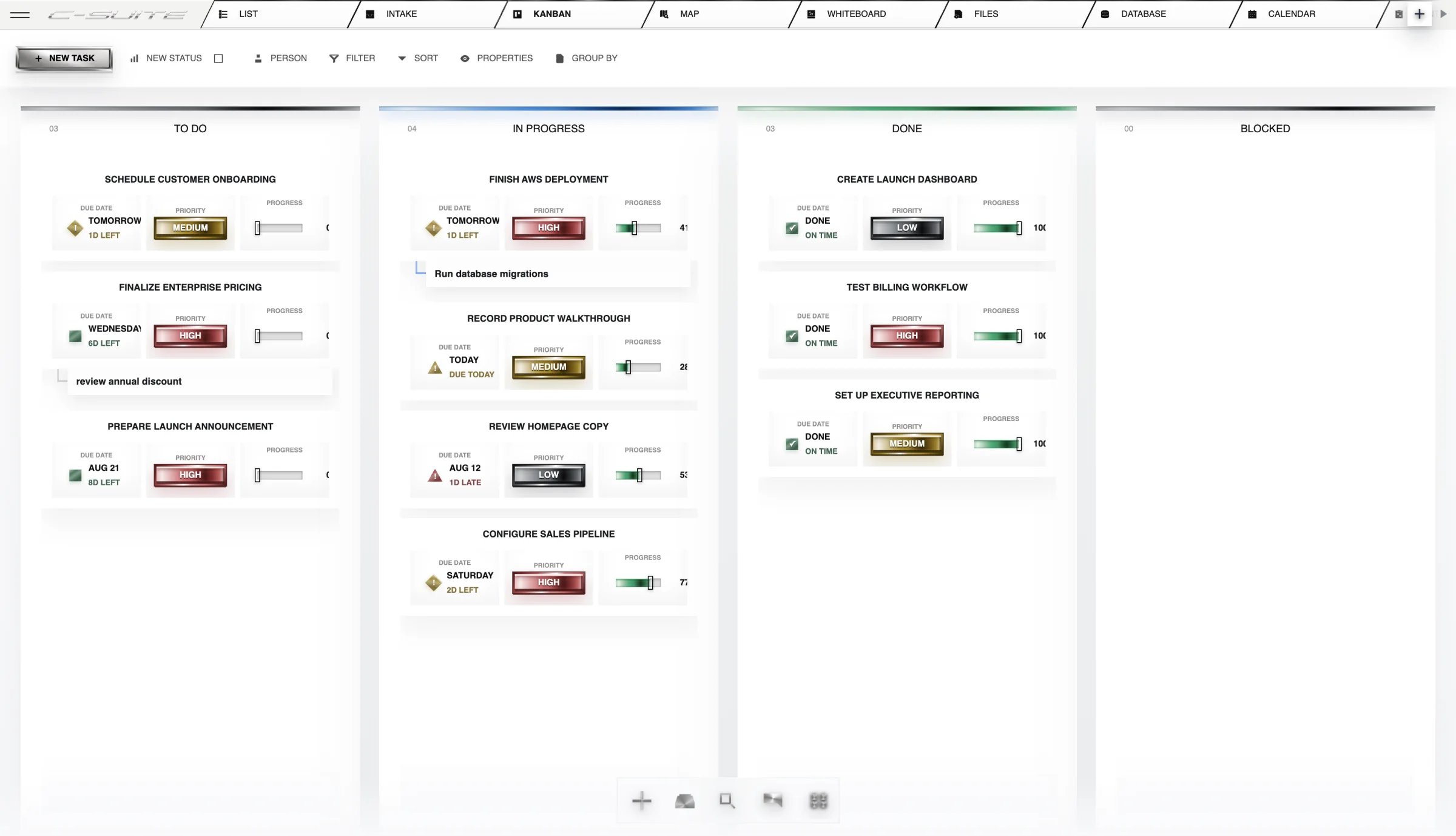
Task management should carry the work forward. In Corporate Suite, the brief, owner, dependencies, and AI solution belong to the same task. Open the assignment. Inspect the approach. Keep the next step in reach.
Prepare the launch handoff
- Owner
- Maya Chen
- Due
- 24 September
Brief
Prepare the handoff for the autumn collection. Include the approved product range, campaign assets, and a release checklist for the store team.
Dependency
Confirm the final product range
A plan the owner can inspect.
- Check the approved range against the launch brief.
- Collect the campaign assets in the handoff.
- List the release checks and who will review each one.
Review
Can the store team identify what to publish, what to check, and who to ask?
Example content, not a live generation. In Workaholic, the task and its solution remain connected.
Assign the work. Keep the explanation.
A title names the job. A useful handoff tells the next person what the job requires. Give the brief a permanent place beside its owner.
A loose request
“Can you get the launch ready?”The details are somewhere in the conversation.
The next person has to reconstruct the scope before they can start.
A task with a brief
- Outcome
- A launch handoff the store team can use.
- Include
- Approved range, campaign assets, release checks.
- Owner
- Maya Chen
- Depends on
- Final product range confirmation.
The owner can inspect the brief, follow the dependencies, and discuss the work from its record.
One illustrative assignment, two ways to hand it over.
The next step has a previous step.
Make prerequisites visible before the deadline becomes the explanation.
Confirm the product range
The launch handoff depends on knowing which products are approved. Attach the prerequisite task instead of leaving that condition inside a message.
Prepare the launch handoff
Keep the approved range, assets, and release checks in the task brief. Use subtasks for smaller pieces that need their own ownership.
Illustrative dependency chain. Open each task to inspect its role.
Give blockers a name
Link the task you depend on. Its title, owner, status, and due date make the prerequisite concrete.
Give smaller jobs an owner
Break an assignment into subtasks when one line can no longer describe who needs to do what.
Keep the conversation attached
Discuss the assignment where its description, attachments, and dependencies can be inspected together.
A proposed solution. A considered decision.
AI can help form the approach. The person responsible still needs to judge it.
Launch handoff · Review notes
The plan calls for an approved range, campaign assets, and release checks. What would make this handoff usable?
Try the example checklist. Nothing is saved or marked complete in your workspace.
The brief is part of the input
Solution generation draws on the task and selected connected context. Put the intended outcome and requirements in the record, so the approach starts with the assignment you actually mean.
Inspect
Compare the proposed steps with the brief. Identify missing information and check the sources before relying on the plan. A plausible answer is still a proposal.
Reconsider
When requirements change, review the solution again. A plan that answered an earlier brief may no longer be the right next step.
Verify
Check the delivered work against the requested outcome. Generating a plan and finishing the assignment are separate events.
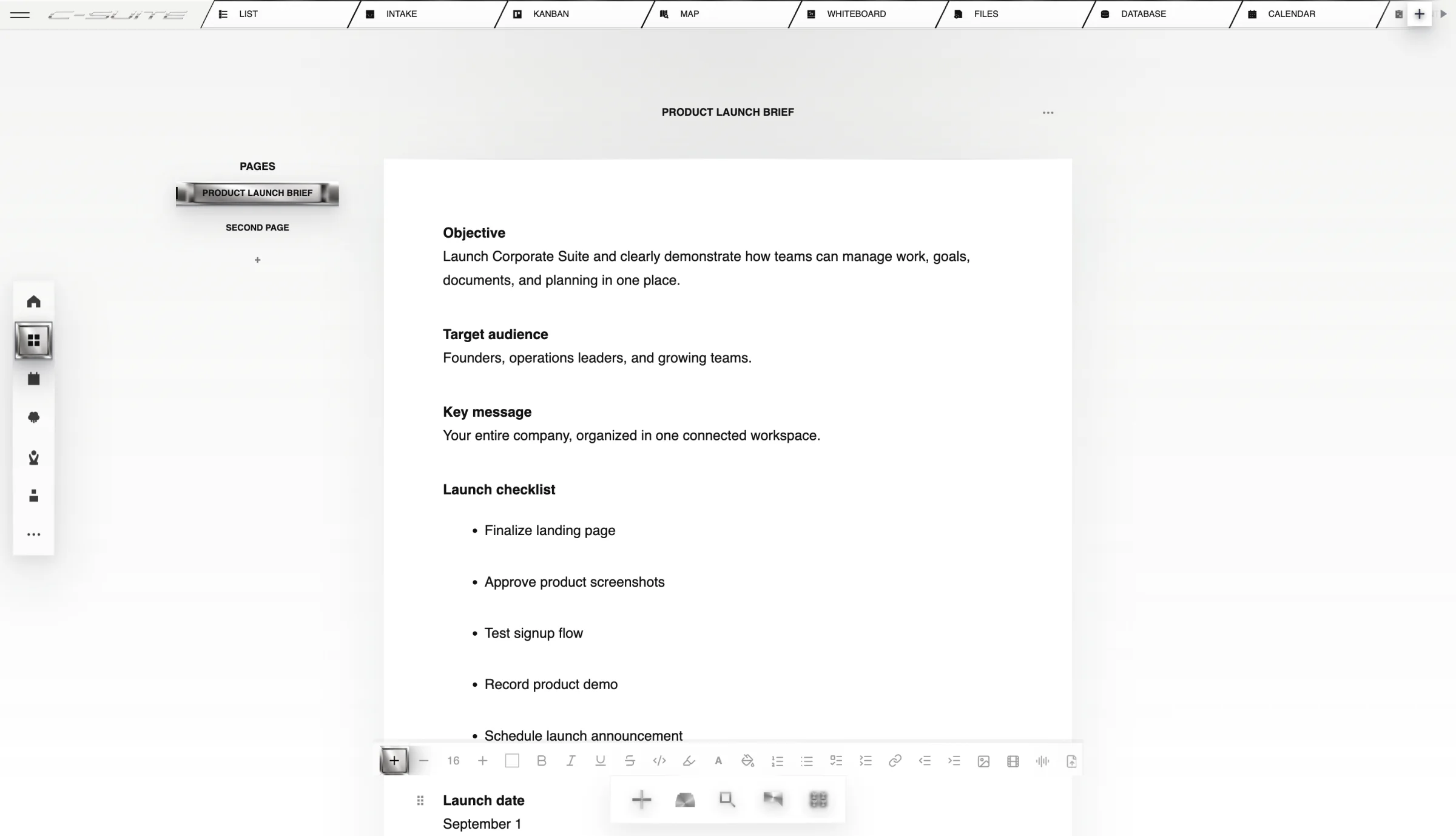
Give the work a wider view.
Give the next assignment somewhere to go.
Start with a real job. Write the brief, assign the owner, connect the prerequisites, and review the approach beside the task.
CreateBefore you put it to work.
What is a task solution?
A task records the assignment. Its Solution pane holds a connected plan for approaching that work, including steps and readiness checks. Keep the owner, brief, and discussion with the assignment while reviewing the proposed approach.
What context does AI use?
Task solution generation can use the task description and selected context from its project, dependencies, subtasks, comments, and linked records. Context is bounded; it does not mean every company file is read or every attachment is fully included.
Does AI automatically finish the task?
Generating a solution does not establish that the work is complete. Review the proposed steps, check the underlying information, and verify the actual result before treating the assignment as finished.
Can I connect tasks and break down the work?
Yes. Task detail supports dependencies and subtasks alongside the owner, dates, description, attachments, and collaboration. Use these relationships to make prerequisites and smaller pieces of work explicit.
Does solution generation use Working Credits?
AI generation is subject to the current plan and Working Credits rules. Check Pricing for the current terms before choosing a workflow; the examples on this page do not run a generation or consume credits.